PDF download
180911
Press release
IFAT Trend Index 2026: Municipalities see growing climate risks and lack the funds to adapt
November 18, 2026
- A summer of extreme heat shifts perceptions of climate risk, bringing drought and water shortages into focus
- 82% cite a lack of funding as a barrier to climate adaptation
- The share citing wildfires as a major challenge more than doubled
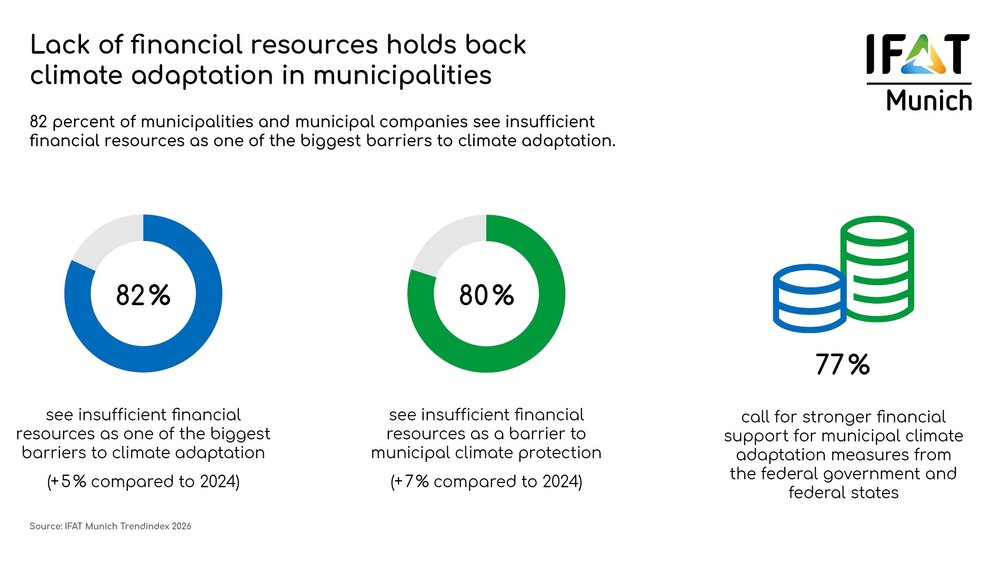
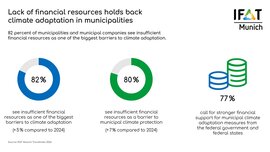
Germany’s municipalities are under growing pressure to adapt to climate change. This past summer’s extreme heat brought the risks of drought, water shortages and extreme temperatures into sharper focus. At the same time, many cities and towns lack the funds to make their communities more resilient to the effects of climate change. The IFAT Munich Trend Index 2026 found that 82% of municipalities and municipal utilities surveyed see insufficient funding as one of the biggest barriers to climate adaptation, up five percentage points from 2024.
Funding pressures are also intensifying for local climate mitigation. In the survey, 80% of respondents cite a lack of funding as a barrier, up seven percentage points from two years ago. This widens the gap between what climate-resilient infrastructure requires and what municipalities can afford. The survey found that 77% of respondents call for more funding for local climate adaptation measures from Germany’s federal and state governments. Nearly half (49%) also support developing new sources of municipal revenue.
VKU calls for broader funding for water infrastructure
“Municipal water utilities face two challenges. In many places, infrastructure is reaching the end of its service life and needs to be adapted to the effects of climate change, such as dry spells and heavy rainfall,” says Karsten Specht, Vice President of the Verband kommunaler Unternehmen (VKU). “The necessary investment exceeds what user charges alone can cover. Germany’s federal and state governments therefore need to provide additional financing options and targeted funding programmes and include water and wastewater infrastructure in public infrastructure funding and special funds.”
Summer heat shifts perceptions of local climate risks
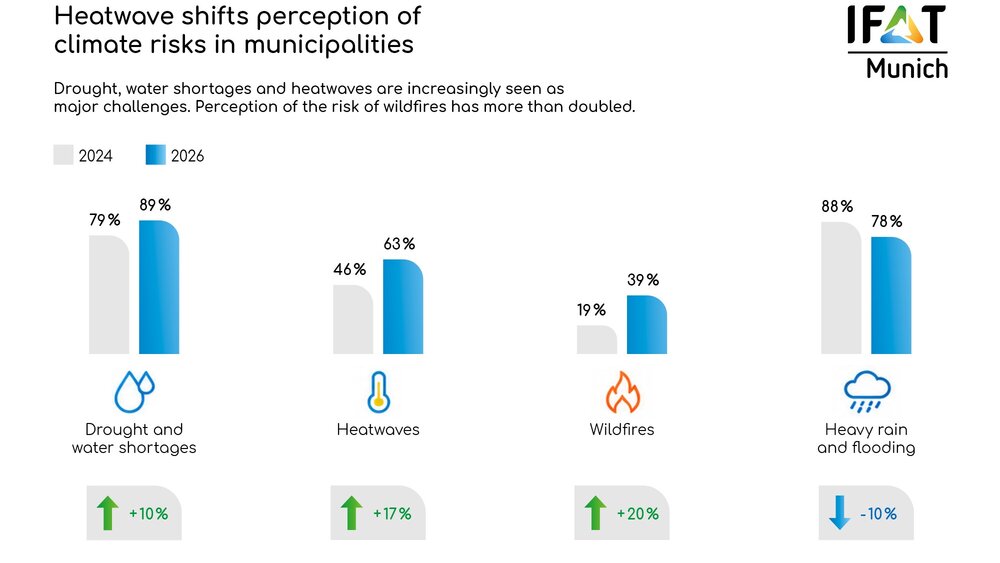
Another finding from the IFAT Munich Trend Index shows how strongly recent extreme weather can shape perceptions of the challenges municipalities face. In the survey, 89% of respondents rank drought and water shortages among the biggest challenges posed by climate change, up ten percentage points from 2024. The share citing heatwaves also rose markedly, from 46% to 63%. For wildfires, the figure more than doubled, from 19% to 39%.
The share citing heavy rainfall and flooding fell from 88% in 2024, when they were the most frequently cited challenge, to 78%. Heavy rainfall remains one of the biggest climate risks for municipalities. Respondents now give it less weight relative to the effects of heat and drought.
“This summer’s extreme heat made it very clear what drought and extreme temperatures can mean for cities and towns. That is also reflected in the findings of the IFAT Munich Trend Index. We must avoid preparing only for the most recent extreme weather event,” says Philipp Eisenmann, Exhibition Director of IFAT Munich. “Municipal infrastructure must withstand prolonged dry spells as well as heavy rainfall and flooding. To achieve that, we must use resources more wisely, keep more water in circulation and make infrastructure more resilient. Circularity is a must, especially when it comes to adapting to climate change.”
Downloads
Belonging images

Matthias Glötzner
- PR Manager
+49 89 949-21483
+49 89 949-21483Write an e-mail
Write an e-mail